ENERGY SAVINGS WITH LED LIGHTS
LED lights for energy saving in the home, for indoor and outdoor use.
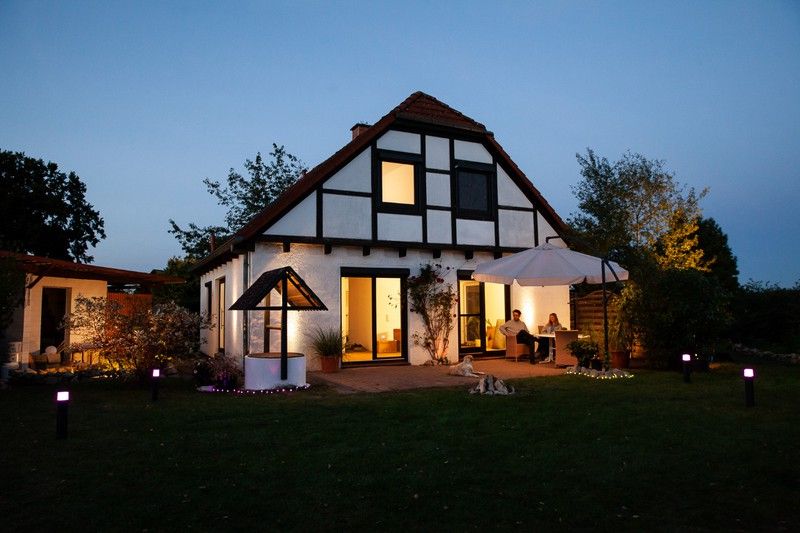
In 2009, the withdrawal of all incandescent light bulbs (the traditional kind) from the market was approved, to be replaced by new LED lighting, which is much more efficient. As a result, manufacturers such as Philips, Osram, and Ledvance, among others, have completely ceased production.
LED lighting, in general, has numerous advantages that benefit both you and the planet:
They consume up to 85% less energy, resulting in enormous energy savings and, consequently, a decrease in your electricity bill.
LED bulbs are more durable, lasting up to 50,000 hours of use compared to the 2,000 hours of a traditional bulb.
Their low replacement frequency translates into additional savings (fewer purchases over the years). They turn on faster, so there's no waiting to get their full potential. They don't give off heat, and they don't emit infrared or ultraviolet radiation. They are more durable, so they are less likely to break. They are more environmentally friendly because they pollute less. There is a wide variety of models, shapes, sizes, and colors available. But despite the fact that replacing traditional lighting with current LED technology represents a total savings of around 90%, the misconception persists that acquiring these new lights requires a large initial investment. This idea has been rooted for a decade, since the introduction of this new technology, as in all sectors, involved a high cost that was passed on to the price of the products. But continuous development and high production, especially for the domestic sector, have led to a significant price reduction, so nowadays you can find LED bulbs, spotlights, tubes… and all kinds of LED lighting fixtures at very economical and competitive prices. You can buy a quality bulb for approximately 1 euro, which is less than the price of old energy-saving bulbs.
While it's true that awareness of the benefits of LEDs is driving the switch, this is only happening in areas where artificial lighting use is high, leaving other areas to continue using the old bulbs. This approach prevents achieving complete and significant savings, which can only be attained by replacing all light sources.
Other related articles
 May 21, 2025
FEWER MOSQUITOES THANKS TO ACTINIC LIGHT BL
Light sources for attracting mosquitoes outdoors and indoors March 28, 2025
ALEALUZ AND THE ENVIRONMENT
At Alealuz, we are committed to recycling. That's why we not only … Feb. 3, 2025
Lighting for warehouses, garages, industrial buildings, etc...
Lighting for areas such as parking lots, warehouses, industrial premises, etc... Dec. 31, 2024
WHY SWITCH TO LED LIGHTING?
Because it's interesting to change conventional lighting for LED lighting Nov. 20, 2024
Receive our news