Lighting for warehouses, garages, industrial buildings, etc...
Lighting for areas such as parking lots, warehouses, industrial premises, etc...
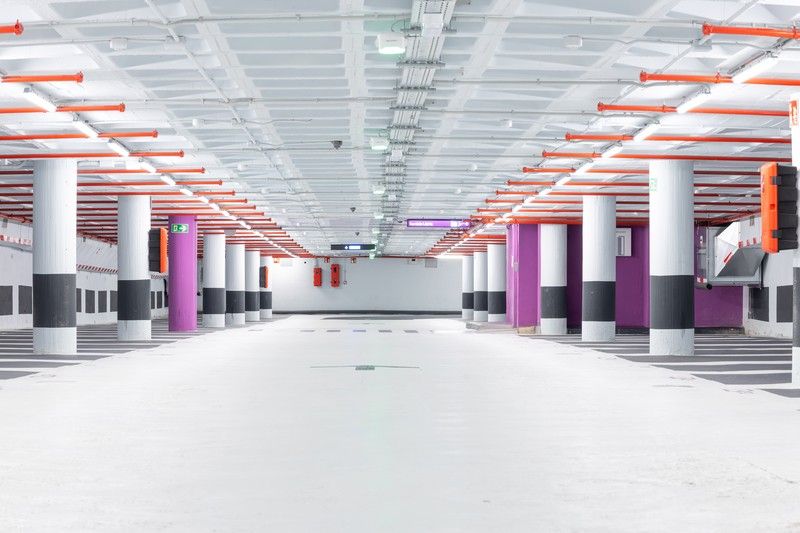
The lighting needs of industrial spaces, whether public or private, are very different from those used in homes or for personal use; therefore, there are specific solutions and products for this sector.
Warehouses, premises, and storage facilities that house large and small industries are usually large spaces with high ceilings (around 5 or 6 meters high), open layouts, and typically specific work areas. In addition, most of these spaces operate for 12 to 24 hours a day, requiring consideration of nighttime and prolonged lamp use. Due to all these requirements, the planning of an industrial lighting project must be carried out meticulously. It is advisable to opt for a personalized study, conducted by a professional, who can advise on lighting needs and the technology to be used. This includes making the most realistic possible forecast of estimated consumption, assessing the required brightness, and other parameters to optimize the investment.
Tips for installing industrial lighting:
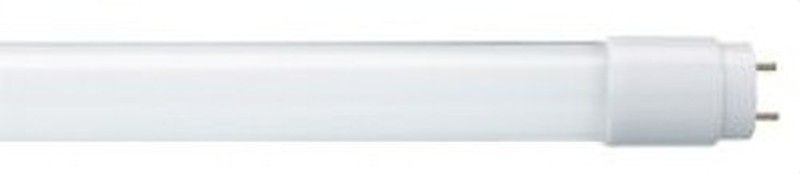
LED technology: offers higher light quality, savings due to its low energy consumption, long lifespan, and requires less maintenance. Furthermore, LED lamps barely heat up and allow for the integration of intelligent automation systems, which provides significant benefits for industry. Although the initial investment is higher compared to conventional lighting, long-term savings can reach up to 70%. It is important to choose reputable brands as a guarantee of quality. The LED type should be SMD (Symbolized Dial-up) because these bulbs can continue to function even if some of their LEDs are damaged. This type of technology illuminates at 100% capacity as soon as it is activated, so there is no need to wait for it to warm up. They emit much less CO2 and avoid the stroboscopic effect, or the effect that occurs in vision due to the constant flickering of the light when it is about to burn out.
LEDs
Brightness: The amount of light will depend on the installed wattage, according to the specific needs of each area. In spaces with high ceilings, a lamp with more wattage will be needed, for example. Insufficient lighting will cause eye strain, and excessive lighting can cause glare, in both cases with the associated health, economic, and environmental consequences. Contracting for just the necessary wattage will optimize energy consumption and avoid unnecessary bills. Light temperature: This refers to the quality and color of the light, ranging from the whitest and coolest to the warmest and most orange. The former is usually used in industries where active and precise work is required (hospitals and healthcare centers, educational centers, food processing, etc.), while warm light is commonly used in restaurants, leisure areas, shops, and especially in homes.
Spotlight Angle: This refers to the area covered by the light beam. Keep in mind that the greater the height, the wider the angle (covering more space), but the weaker the light will be at the bottom. Therefore, it's important to study the beam angle of the luminaires to be installed (this information must be specified by the manufacturer) and calculate the distance between lamps to cover the area. Warehouses, parking lots, and garages typically don't require high light intensity, unlike production industries where good lighting is essential for operations.
Reflectors: These are devices that project the received light to redirect it to the areas where it's needed more intensely. They are ideal for minimizing energy consumption. Although there are various types, metallized reflectors are the most commonly used in industry.
Overlapping Areas: These are areas where there is an excess of light fixtures illuminating the same point, resulting in unnecessary expenses for both the fixtures and energy consumption.
Dead zones: These are the black spots, or hazardous areas in the industrial sector, because light doesn't reach them due to columns, corners, shelving, high-density storage areas, etc. It's important to properly plan the location of light points for optimal distribution and to avoid accidents caused by poor lighting.
Determining zones: To carry out a good study, it's advisable to divide the large space into zones and treat each one optimally and independently. This way, specific needs are met, whether it's a corridor or a work area. Once the uses of these zones are defined, a phased lighting system should be installed to save energy.
Finishes for industrial use: These are lamps or bulbs that are specially designed and manufactured for more aggressive use and can withstand impacts, vibrations, sparks, dust, wind, fumes, or extreme temperatures. These types of LED lights have a more durable finish and watertight enclosures that protect them. Electronic timers: mechanisms for programming both the on/off switching of lights. Their purpose is to optimize energy consumption and they are ideal for businesses that close at night and on weekends and want to ensure that the lights are not left on. Presence sensors: these systems activate when they detect movement, illuminating the area only when necessary, resulting in greater energy savings. They are typically installed in areas with low foot traffic. Maintenance: the cost and consumption of an industrial installation is significantly higher than a domestic one, so it is advisable to have a maintenance service, either internal or external, that handles the prevention and upkeep of the system.
Other related articles
 May 21, 2025
FEWER MOSQUITOES THANKS TO ACTINIC LIGHT BL
Light sources for attracting mosquitoes outdoors and indoors Dec. 31, 2024
WHY SWITCH TO LED LIGHTING?
Because it's interesting to change conventional lighting for LED lighting Nov. 20, 2024
LIVING ROOM LIGHTING
The importance of good lighting for the living room Nov. 8, 2024
CHRISTMAS LIGHTING FOR BUSINESSES
Christmas lighting to decorate shops Oct. 22, 2024
Receive our news