WINTER TIME CHANGE AND ENERGY SAVINGS
Time change and energy saving: it's not as efficient as it seems.
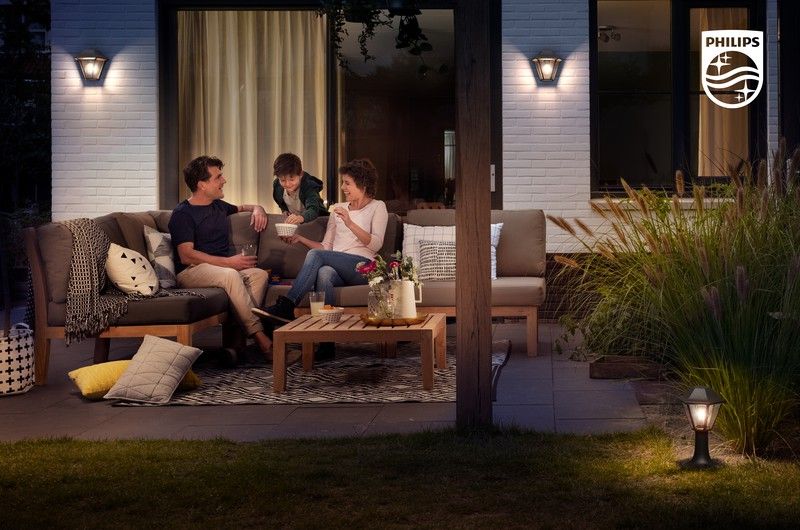
Once again, the clocks change. On the last Sunday of October, summer time ends, and clocks are set back one hour; at 3:00 a.m., they will go back to winter or standard time.
The time change is applied in 75 countries worldwide, including the 27 of the European Union, and affects some 1.5 billion people, which is no small number.
The countries that adopt this practice are those with fewer hours of sunlight, that is, those in the Northern Hemisphere: Europe, the United States, Canada, and Mexico (with some exceptions). Conversely, in the Southern Hemisphere, practically no country observes this time change. The reason is a supposed energy saving, especially in the area of lighting, but not everyone agrees, despite its mandatory implementation since 1981. Experts concur that the real savings in lighting come with the switch to LED technology. The beginning of the time change The first regulations regarding the time change date back to the beginning of 1918. It was promoted by Germany during the First World War when significant savings in coal consumption were needed. The idea was quickly copied by neighboring countries, including Spain, which abandoned this time change starting in the 1950s. But it was in 1973, with the OPEC blockade and the Arab oil embargo that led to the first global crisis, that drastic measures were taken regarding energy conservation, leading to the reintroduction of daylight saving time, especially in the US and Europe. It was in 1981 that it was reinstated as a directive throughout the European Union. Today, organizations question the supposed benefits of this measure. One of them is WWF, an environmental NGO that believes that daylight saving time has no impact on savings and efficiency. How it affects us: There are three types of clocks (biological, solar, and official), with the biological clock being the one that governs people and animals. It's important to know that time changes seriously affect health, causing disorders related to anxiety, depression, sleep, digestion, fatigue, irritability, and lack of concentration, among others, resulting in healthcare costs that are completely unjustified. The circadian rhythm, established by sunlight and darkness, is also affected. Sunlight doesn't have the same effect in the morning, which activates the rhythm, as it does in the afternoon, when the light is softer and slows it down. Those who suffer most from this time change are children and the elderly, and it has been shown that pets also suffer indirectly. To cope with this change, it is advisable to gradually adjust meal and sleep schedules.
Time Zone in Spain
The Association for the Rationalization of Spanish Time Zones (ARHE) reports that Spain is on the wrong time zone after the 1942 decree adopting Berlin time to align with Europe, at the expense of not aligning with its natural meridian.
In 1897, at the first world conference on time zones, the world was divided into 24 meridians, with two corresponding to Europe: the Berlin Meridian and the London Meridian. Spain is located closer to the London Meridian, which crosses the three provinces of Aragon, Castellón, and Alicante, than to the Berlin Meridian. For this reason, Spain should have the same time zone as the Canary Islands, Portugal, and England year-round.
There are only two countries in the world that live in a different time zone than the one corresponding to their meridian: Spain and Venezuela.
A dubious energy saving
There is no comprehensive study that demonstrates any truly significant savings to support this twice-yearly time change.
For families, winter time means it gets dark an hour earlier, so lights are turned on earlier, and at best, the hour of daylight saved in the morning is used up in the afternoon. The savings are not evident in shops either, since their opening time is around nine o'clock, so they don't benefit from those savings.
Industries, healthcare facilities, schools, offices… do not operate using natural light, so the savings are not as obvious. According to the Association of Electricity Consumers (ANAE), after the switch to summer time, which takes place on the last Sunday of March, there is a sharp drop in energy consumption, but this is more related to the change of season, the arrival of warmer weather, holidays, and outdoor activities than to the time change itself. According to the Institute for Energy Diversification and Saving (IDAE), an agency attached to the Ministry of Industry, Energy and Tourism, the potential savings in lighting due to the time change is 5% of electricity consumption. This represents approximately 300 million euros, of which 90 million correspond to savings in Spanish households, translating to a savings of just six euros per household. The remainder corresponds to industry and the lighting of service buildings. It is believed that this time change is more of an inertia that continues to be used to raise public awareness about energy saving than a real saving in itself. The countdown to the last time change in Spain could be very near. According to the official calendar published in the Official State Gazette (BOE), October 25, 2026, would be the date on which the time change that adjusts the clock one hour back to adapt to winter time will be applied, possibly for the last time. However, this date is not definitive and will depend on future decisions by the European Union, which since 2018 has proposed eliminating seasonal time changes. The BOE could therefore soon publish other modifications regarding the last time change in Spain.
Other related articles
 May 21, 2025
FEWER MOSQUITOES THANKS TO ACTINIC LIGHT BL
Light sources for attracting mosquitoes outdoors and indoors March 28, 2025
ALEALUZ AND THE ENVIRONMENT
At Alealuz, we are committed to recycling. That's why we not only … Feb. 3, 2025
Lighting for warehouses, garages, industrial buildings, etc...
Lighting for areas such as parking lots, warehouses, industrial premises, etc... Dec. 31, 2024
WHY SWITCH TO LED LIGHTING?
Because it's interesting to change conventional lighting for LED lighting Nov. 20, 2024
Receive our news